A Special Conversation in Afrofuturism x AfroSurrealism with Vince Fraser ⚡️👁🖤👁⚡️
Dreams, Frequencies, and Ancestral Odysseys.
Welcome to the first post of its kind on the Apeiros World Project newsletter! This special interview is part of a new series and format featuring stories from other creators in the Art x Commerce+Community space.
The Origins of an Odyssey
It starts with a word. A sound. An emotion. A vision. These are just a few seeds from which great ideas are born—
The upcoming manga Apeiros World Odyssey was born out of an idea to create an authentic narrative experience centered around the concept of identity—and not in the predictable “lamestream” Hollywood checkbox way, but as an explorative thesis that will (hopefully) resonate with readers and fans.
At the intersection of Afrofuturism and Afrosurrealism exists a spirited and fertile genre with the perfect landscape for expression of identity, creativity, and opportunities to tell new and albeit forgotten stories of the human experience that can lead to evolution of our present and future selves should we choose to embrace their deeper truths with an open mind.
And there’s no better person that does it best than the respected Vince Fraser.
Below is part 1 of 2 with fellow creative visionary 🫴Vince Fraser.
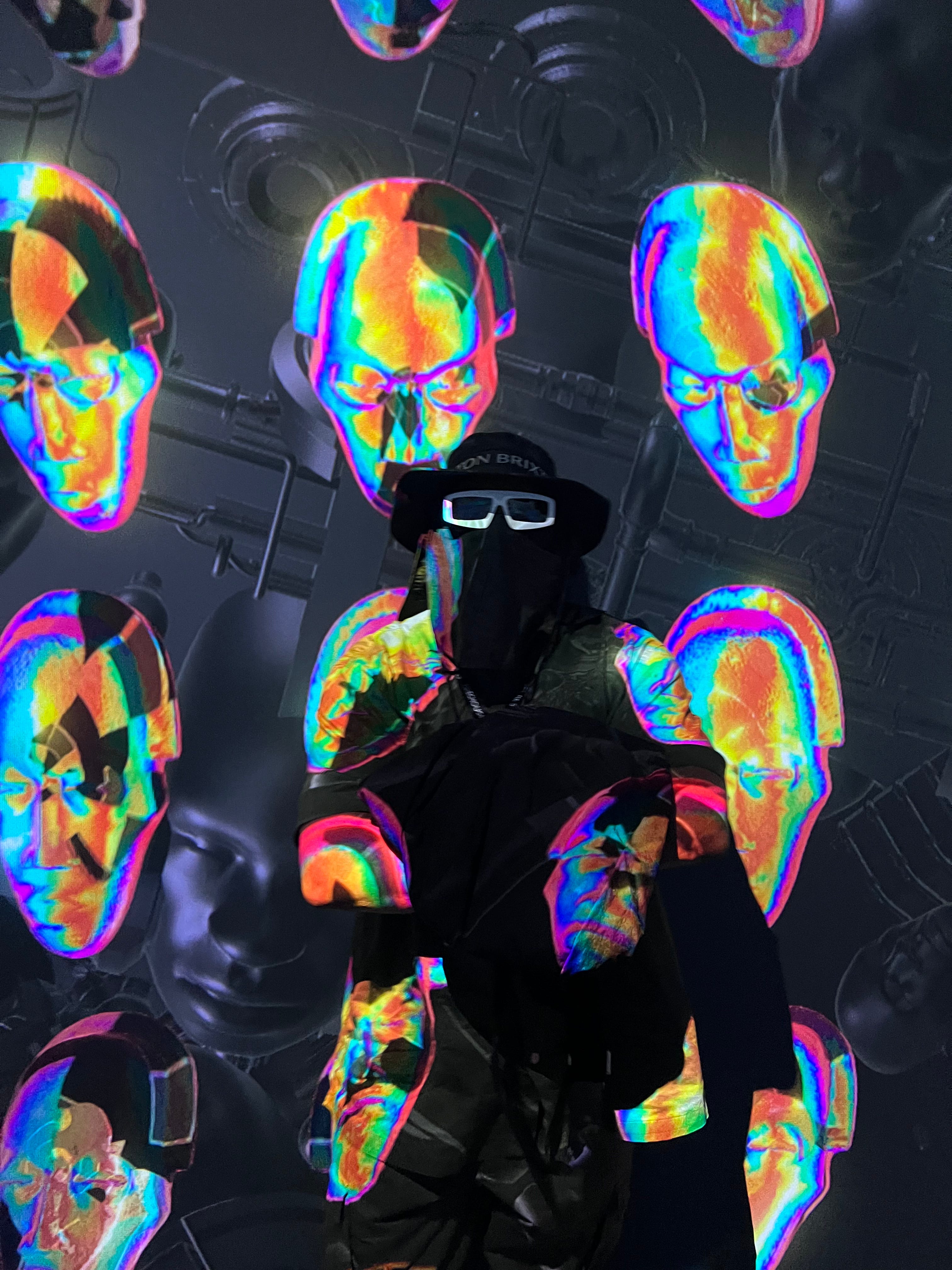
In our ever shifting modern world, the art and media-entertainment have become over-analyzed, aggressively marketed, prepackaged, and ultimately sterilized into mere imitations of the past’s most memorable works.
“Everything is a copy of a copy of a copy.”—Tyler Durden
Vince’s artistic truth stands out as a change agent for metamorphosis of thought and feeling into something that could honestly be described as pure digital magic.
“Transformations that happen right before your eyes and all the while rendering hi-fidelity visual storytelling in an immensely provocative manner.”
From his deeply rooted Jamaican heritage in the Caribbean to the inner streets of London, Vince is no stranger to embracing the most authentic version of himself and his message.
There’s proving, and then there is knowing—Vince’s work ethic and creative vision make it clear he knows what true storytelling is all about. Now let the story begin, begin:
What makes you Vince Fraser?
I think what makes me who I am is an endless curiosity about where we come from and how our stories shape who we become. I’ve always been drawn to the spaces between history and imagination, where memory, culture and identity can be reinterpreted in new ways.
As a Black British artist of Jamaican heritage, my work is deeply influenced by the African diaspora. I don’t see art as simply making beautiful images; I see it as a way of reconnecting with histories that have been fragmented, overlooked or forgotten. Every piece I create is an opportunity to honour those stories while imagining new possibilities for the future.
I’m also someone who embraces change. Throughout my career I’ve evolved from Interior design into digital illustration, animation, AI and immersive experiences, but the motivation has always remained the same: to tell meaningful stories that resonate emotionally. Technology will continue to change, but my purpose doesn’t. I’m driven by the belief that creativity can preserve culture, challenge perspectives and inspire people to see themselves—and each other—in a different light.
At the heart of everything I do is storytelling. If my work encourages someone to ask questions, reconnect with their heritage, or simply feel seen, then I’ve achieved what I set out to do.”
What’s been your single biggest struggle as an artist/creative on your journey that you’ve overcome?
One of my biggest struggles has been learning to trust my own voice. Early in my career, much of my work was driven by commercial briefs, where the focus was on solving someone else’s creative problem. While that taught me discipline and versatility, there came a point where I realised I had stories of my own that needed to be told.
Making the shift from commercial illustrator to visual artist wasn’t easy. It meant stepping away from what felt safe and embracing work that was deeply personal—exploring Black identity, ancestry and cultural memory through my own perspective. There was no blueprint for the kind of work I wanted to make, especially using digital media, which wasn’t always recognised in the contemporary art world.
Over time, I stopped worrying about fitting into existing categories and focused on creating work that felt authentic. Ironically, that decision opened the most meaningful opportunities of my career. It taught me that the most powerful work comes from being true to your own vision rather than trying to meet other people’s expectations.
You’ve mentioned you prefer to operate in the realm of Afro-surrealism vs. Afrofuturism, can you elaborate more on that through your artistic perspective?
I’ve always admired Afrofuturism and the way it reimagines Black futures, but over time I’ve realised that Afro-surrealism feels much closer to the way I experience and interpret the world. For me, the surreal already exists within our history. The stories of the African diaspora are filled with resilience, spirituality and transformation that often feel beyond imagination. My work brings together ancestry, memory and contemporary culture, where the past and present exist side by side. Technology is simply a tool to tell those stories. I’m less interested in imagining who we’ll become, and more interested in rediscovering who we’ve always been.
AI—you haven’t shied away from using it as a proper tool and not succumbing to it (by way of hype), do you face criticism within the industry(from other artists?) How do you respond to it all if so?
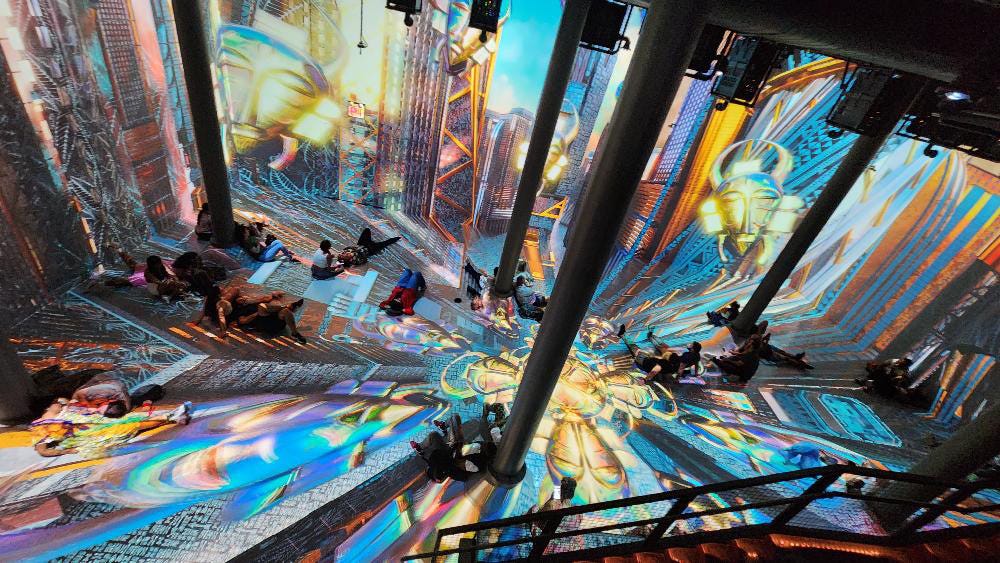
I understand why AI sparks debate, and I think those conversations are important. Like any new technology, it raises questions about creativity, ethics and originality. For me, though, AI is just another tool—it isn’t the artist. The ideas, research, lived experience and storytelling all come from me. I’ve embraced new technology throughout my career, from digital illustration to immersive media, and AI is simply the next step in that journey. I don’t use it because it’s trendy; I use it because it helps me explore ideas in new ways. At the end of the day, it’s the artist’s vision, not the technology, that gives the work meaning.
How do you approach the subject matter for each project you create? Where does the seed of the idea germinate—is it music, a conversation or something else entirely?
“Ideas rarely arrive fully formed. More often than not, they begin as a feeling, a question or a moment of curiosity. It could be a conversation with someone, a piece of music, a line from a book, an old photograph, or discovering a forgotten piece of African or Caribbean history. Sometimes it’s something I can’t quite explain—it just stays with me until I feel compelled to explore it.”
“I’m naturally curious, and I think that’s where every project begins. Once something captures my attention, I start researching. I read extensively, gather visual references, explore symbolism and look for connections between history, culture, spirituality and contemporary life. I enjoy finding the threads that link seemingly unrelated ideas together.”
Music also plays an important role. It doesn’t necessarily dictate the subject matter, but it helps shape the emotional landscape of a piece. Artists like Sun Ra, Erykah Badu, Miles Davis or even the rhythms of dub reggae can shift my mindset and help me find the atmosphere I’m looking for. Music has a way of opening creative doors that words sometimes can’t.
I never begin with the intention of making a beautiful image. I begin with the intention of telling a meaningful story. Once I understand the story, the visuals start to reveal themselves.
In many ways, I see myself as both an artist and a researcher. My role is to gather fragments of history, memory, mythology and lived experience, then weave them together into something that feels both familiar and unexpected. That’s often where the magic happens—when people recognise something emotionally, even if they’ve never seen it before. That’s the space I’m always trying to create.
Where does the wellspring of African culture, subject matter, history, and visual language come from; is it something that you grew up around natively from your parents’ Caribean heritage or something you decided to learn for your own sake?
It’s a combination of both. Growing up in a Jamaican family, African culture was always present, even if it wasn’t explicitly identified as such. It was there in the music, the language, the food, the spirituality, the sense of community and the stories that were passed down. Those influences became part of who I was long before I fully understood where they came from.
As I got older, I became increasingly curious about what existed beyond the Caribbean. I realised that Jamaica was only one chapter in a much longer story. That curiosity led me to explore the African continent—its history, philosophies, kingdoms, spiritual traditions, art and symbolism. The more I researched, the more I began to recognise connections between Africa and the cultures of the diaspora. It felt less like discovering something new and more like reconnecting with something that had always been there.
That journey has never really stopped. I’m constantly reading, travelling when I can, visiting museums, talking to artists and cultural practitioners, and questioning what I think I know. Every project becomes another opportunity to learn.
“I don’t see my work as trying to recreate African culture. Rather, it’s a personal interpretation of the conversations between Africa and its diaspora.”
It’s about acknowledging how culture evolves, survives and transforms across generations while still carrying traces of its origins.
In many ways, my practice is an ongoing act of reconnection. The more I learn about Africa, the more I understand myself, my Jamaican heritage and the visual language that naturally finds its way into my work. That search for understanding continues to shape everything I create.


How do you approach collaboration and working with others; whether individuals or brands—is it easy/difficult when you’re wanting to express the sociopolitical themes and subject matter of Afrosurrealism and related African diasporic art and history?
Collaboration has always been an important part of my journey because I believe the most powerful ideas often come from bringing different perspectives together. Whether I’m working with an individual artist, a musician, a cultural institution or a brand, the most important thing for me is having a shared understanding of the purpose behind the work.
When you are exploring themes around African diasporic history, identity and cultural memory, there is a responsibility that comes with telling those stories. These subjects are deeply personal, and I approach them with a lot of respect and research. I’m not interested in using culture as an aesthetic; I’m interested in creating work that has meaning, depth and emotional resonance.
“The key to successful collaboration is finding partners who understand that the work is about more than just the visual outcome. It is about the message, the history and the experience we want audiences to have. When that alignment exists, the process becomes incredibly rewarding because everyone brings their own expertise and perspective to the conversation.”
Of course, there can be challenges. Sometimes you have to navigate different expectations, especially when working with larger organisations or brands that may be more focused on commercial outcomes. My role is to protect the integrity of the story while remaining open to collaboration and finding creative solutions.
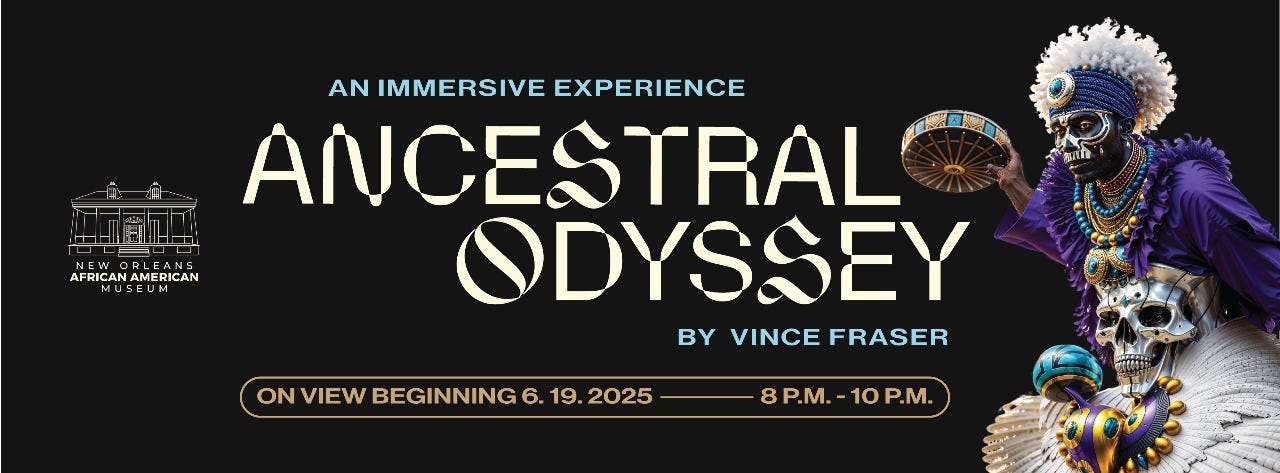
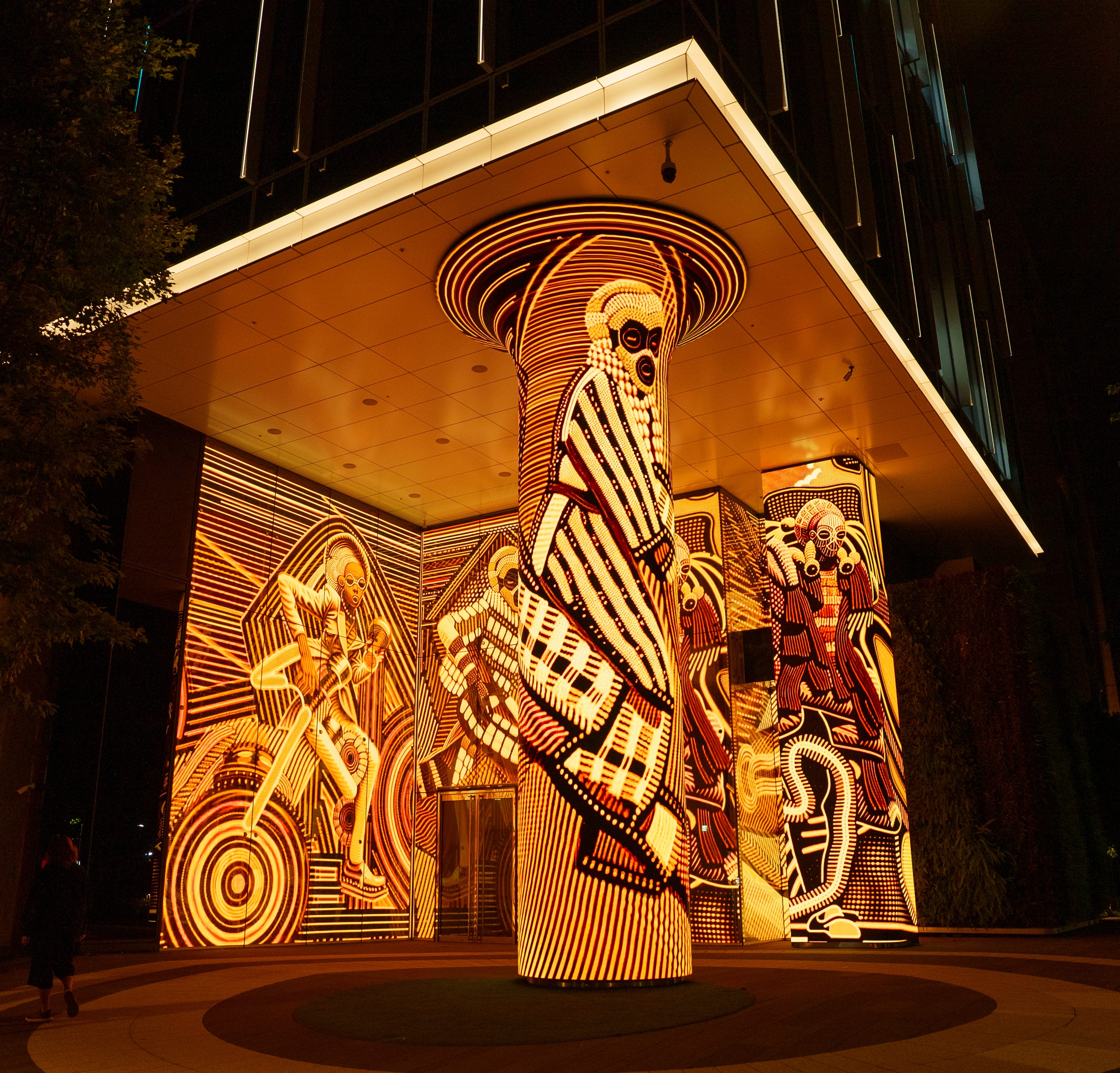
I’ve learned that the strongest partnerships are built on trust. When people respect the vision and understand the importance of the subject matter, it creates space for something much bigger than any individual contribution. Projects like Aṣẹ: Afro Frequencies and Ancestral Odyssey have shown me that collaboration can become a powerful way of amplifying stories that deserve to be seen and experienced.
Ultimately, I see collaboration as a conversation between different forms of knowledge. My role is to bring my perspective, my research and my artistic language to the table, while allowing others to contribute their own energy and expertise. When those frequencies align, that’s when truly meaningful work can emerge.
It’s been said everything in ‘threes’ is perfect, do you feel there could be a potential 3rd sphere to join Afrofuturism and Afrosurrealism? What do you think that could be?
I think there’s definitely room for a third space. Afrofuturism helps us imagine Black futures, while Afro-surrealism explores the spiritual, emotional and dreamlike realities of our lived experience. If there were another sphere, I’d call it Afro-Ancestralism. It’s the idea that our ancestors aren’t behind us—they’re with us, shaping who we are through memory, culture, language and tradition. That’s something I already explore in my work. I’m fascinated by the idea that ancestry is its own kind of technology, carrying knowledge across generations. Sometimes the way forward isn’t about looking ahead, it’s about reconnecting with what we’ve always carried within us.

Socials:
Website: http://linktr.ee/vincefraser
Instagram: www.instagram.com/vincefraser
Facebook: www.facebook.com/vincefraserillustration
Linkedin: https://www.linkedin.com/in/vincefraser/
Twitter: @vince_fraser